The Tao is difficult to fathom. That is why the sages called it xuan, "the dark mystery beyond all mysteries." It is here with us every day, yet it is difficult to sense. It is within us, like a bright candle smothered inside a steel lantern, but we see only darkness. It moves constantly, yet we fail to detect its flow. It is emptiness, but we dwell only in the world of appearances. The Tao is truly great, beyond all descriptions, beyond all conceptions, and beyond all names. It is a mystery, but there is no awakening to life without it. Those who enter into the Tao become one with eternity. Those who enter into the Tao dissolve into Tao itself.Lovely, no?
Saturday, July 27, 2019
A Terrific Quote from a Terrific Book
From Deng Ming-Dao's terrific book on Taoism, Scholar Warrior: An Introduction to the Tao in Everyday Life:

Saturday, July 20, 2019
A Book to Treasure, Part 2
As I wrote last week, I found a treasure in Deng Ming-Dao's phenomenal book on Taoism, Scholar Warrior: An Introduction to the Tao in Everyday Life. If you want to know about Taoism in a complete and thorough way, this book is for you.
Honestly, I didn't know how terrific the book was when I ordered it. I was actually looking for a book on Taoist meditation practices and saw that there was a chapter on that. And once I got to that chapter, after 284 pages, I was a tiny bit disappointed that there was only one meditation practice described. It's a good one, and one I practice several times a week, but there was . . . only . . . one.
[Please, Mr. Deng, would you consider writing a whole book on Taoist meditation practices? I promise to buy a copy.]
But alleviating my disappointment was how well he described two difficult philosophical points. I've never seen the concepts of wu wei, or effortlessness, and emptiness and union explained so well.
I came away feeling like I found a treasure, but also wondering how this beautiful flower of Taoism, so firmly rooted in the Chinese culture, would transplant to Western cultures. [Another book idea, Mr. Deng!] It's something to ponder.
Honestly, I didn't know how terrific the book was when I ordered it. I was actually looking for a book on Taoist meditation practices and saw that there was a chapter on that. And once I got to that chapter, after 284 pages, I was a tiny bit disappointed that there was only one meditation practice described. It's a good one, and one I practice several times a week, but there was . . . only . . . one.
[Please, Mr. Deng, would you consider writing a whole book on Taoist meditation practices? I promise to buy a copy.]
But alleviating my disappointment was how well he described two difficult philosophical points. I've never seen the concepts of wu wei, or effortlessness, and emptiness and union explained so well.
I came away feeling like I found a treasure, but also wondering how this beautiful flower of Taoism, so firmly rooted in the Chinese culture, would transplant to Western cultures. [Another book idea, Mr. Deng!] It's something to ponder.
Saturday, July 13, 2019
A Book to Treasure
As you know, I'm quite the fan of Taoist expert, Deng Ming-Dao. I've been slowly collecting and reading his books, and discovered one that I would consider his master-work. It's called Scholar Warrior: An Introduction to the Tao in Everyday Life. If you want to read about Taoism in its complexity and completeness, this book is one to treasure. It is head and shoulders above any other book on Taoism that I've ever read.
It starts with how Taoists view their religion as not something to be practiced once a week, but as a complete lifestyle. It goes over dietary recommendations, stretching exercises, Qigong, and herbal formulas for health. It then talks about Taoist philosophy, such as effortlessness or wu wei, and issues in the student/teacher relationship. It ends with a large section in which he writes about Daoyin, which bridges exercise and meditation; meditation practices; the ultimate goal of a Taoist; and a clearly written chapter about emptiness and union with the Tao. It is worth the price of the book for the last chapter alone.
If you are even remotely interested in Taoism, this is the best and most complete book I've found. Highly recommended.


It starts with how Taoists view their religion as not something to be practiced once a week, but as a complete lifestyle. It goes over dietary recommendations, stretching exercises, Qigong, and herbal formulas for health. It then talks about Taoist philosophy, such as effortlessness or wu wei, and issues in the student/teacher relationship. It ends with a large section in which he writes about Daoyin, which bridges exercise and meditation; meditation practices; the ultimate goal of a Taoist; and a clearly written chapter about emptiness and union with the Tao. It is worth the price of the book for the last chapter alone.
If you are even remotely interested in Taoism, this is the best and most complete book I've found. Highly recommended.


Thursday, July 4, 2019
Happy Independence Day
May you be free of sorrow and pain.
May you be free to discover your happiness.
May you be free of loneliness and unhealthiness.
May you be free to follow your heart's bliss.
Happy Independence Day.

(photo courtesy of pixabay.com)
Saturday, June 29, 2019
Some More Great Quotes
Here are some more quotes to ponder:

How lovely to think that no one need wait a moment:
we can start now, start slowly changing the world!
How lovely that everyone, great and small, can make a contribution
toward introducing justice straight away.
(Anne Frank)
Those who want to do good are not selfish.
They are not in a hurry.
They know that to impregnate people with good
requires a long time.
But evil has wings.
To build a house takes time.
Its destruction takes none.
(Mahatma Gandhi)

(image courtesy of pixabay.com)
Saturday, June 22, 2019
Some Great Quotes
I came across these quotes and thought them worthy of sharing.
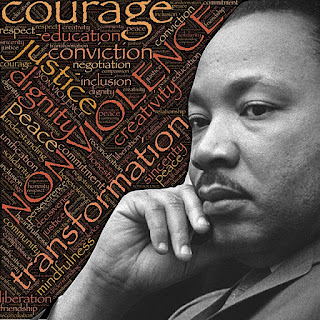
Alone we can do so little; together we can do so much. (Helen Keller)
It is better to be part of a great whole than to be the whole of a small part. (Frederick Douglass)
I have always held firmly to the thought that each one of us can do a little
to bring some portion of misery to an end. (Albert Schweitzer)
Our lives begin to end the day we become silent
about things that matter. (Martin Luther King, Jr.)

(image courtesy of pixabay.com)
Saturday, June 15, 2019
A Book Recommendation, Part 3
In her fabulous and relevant book Fascism: A Warning, Madeleine Albright lists some important questions to ask when assessing a potential leader. In these times of political change, they might be wise questions to ask.
- Do they cater to our prejudices by suggesting that we treat people outside our ethnicity, race, or party as unworthy of dignity and respect?
- Do they want us to nurture our anger toward those who we believe have done us wrong, encourage our grievances, and aim for revenge?
- Do they encourage us to have contempt for governing institutions and the electoral process?
- Do they seek to destroy our faith in essentials to democracy such as an independent press and a professional judiciary?
- Do they exploit the symbols of patriotism -- the flag, the pledge -- in a conscious effort to turn us against one another?
- If defeated at the polls, would they accept the verdict or insist without evidence that they have won?
- Do they brag about their ability to solve all problems, put to rest all anxieties, and satisfy every desire?
- Do they solicit our cheers by speaking casually and with machismo about using violence to do away their enemies?
- Do they echo the attitude of Mussolini: "The crowd doesn't have to know," all it has to do is believe and "submit to being shaped"?
- Or do they invite us to join with them in building and maintaining a healthy center for our societies, a place where rights and duties are apportioned fairly, the social contact is honored, and all have room to dream and grow?
Important questions from an important book.
Subscribe to:
Posts (Atom)